By David Rodriguez · Licensed Insurance Broker & Financial Planner
Editorial Independence: This guide was researched and written by our in-house editorial team. We do not accept payment for editorial coverage. Content is reviewed for factual accuracy before publication.
The Road to Restoration: A Deep Dive into Personal Injury Advocacy and Justice
Life can change in a heartbeat. A morning commute, a routine trip to the grocery store, or a standard medical procedure can suddenly transform into a life-altering event due to someone else's negligence. In these moments, the physical pain is often accompanied by a crushing sense of injustice and overwhelming financial anxiety. Personal injury law is the societal mechanism designed to address this imbalance. It is a field of civil law that allows an injured person to be made "whole" again—at least in a financial sense—by holding the responsible party accountable. However, navigating the legal landscape while recovering from a traumatic injury is a daunting task. Between aggressive insurance adjusters, complex filing deadlines, and the intricacies of proving liability, the path to fair compensation is rarely a straight line. This 2000+ word guide is your roadmap through that process, providing the clarity and depth needed to understand your rights, evaluate your claim, and secure the justice you deserve.
The Foundation of Liability: Understanding Negligence
At the heart of almost every personal injury case is the concept of "negligence." To win a case, you must prove four distinct elements. First is the Duty of Care: the legal obligation to act with the same level of caution that a "reasonably prudent person" would in a similar situation. For example, a driver has a duty to obey traffic laws and watch for pedestrians. Second is the Breach of Duty: showing that the defendant failed to meet that standard. This could be a driver texting while behind the wheel or a store owner failing to clean up a known spill.
The third and often most complex element is Causation. You must prove that the defendant's breach of duty was the direct cause of your injury. If you had a pre-existing back condition, the defense will argue that your pain wasn't caused by the accident, but by your previous health issues. Finally, you must prove Damages: that you suffered actual losses, whether physical, emotional, or financial. Without all four of these elements, even the most sympathetic case will fail in a court of law.
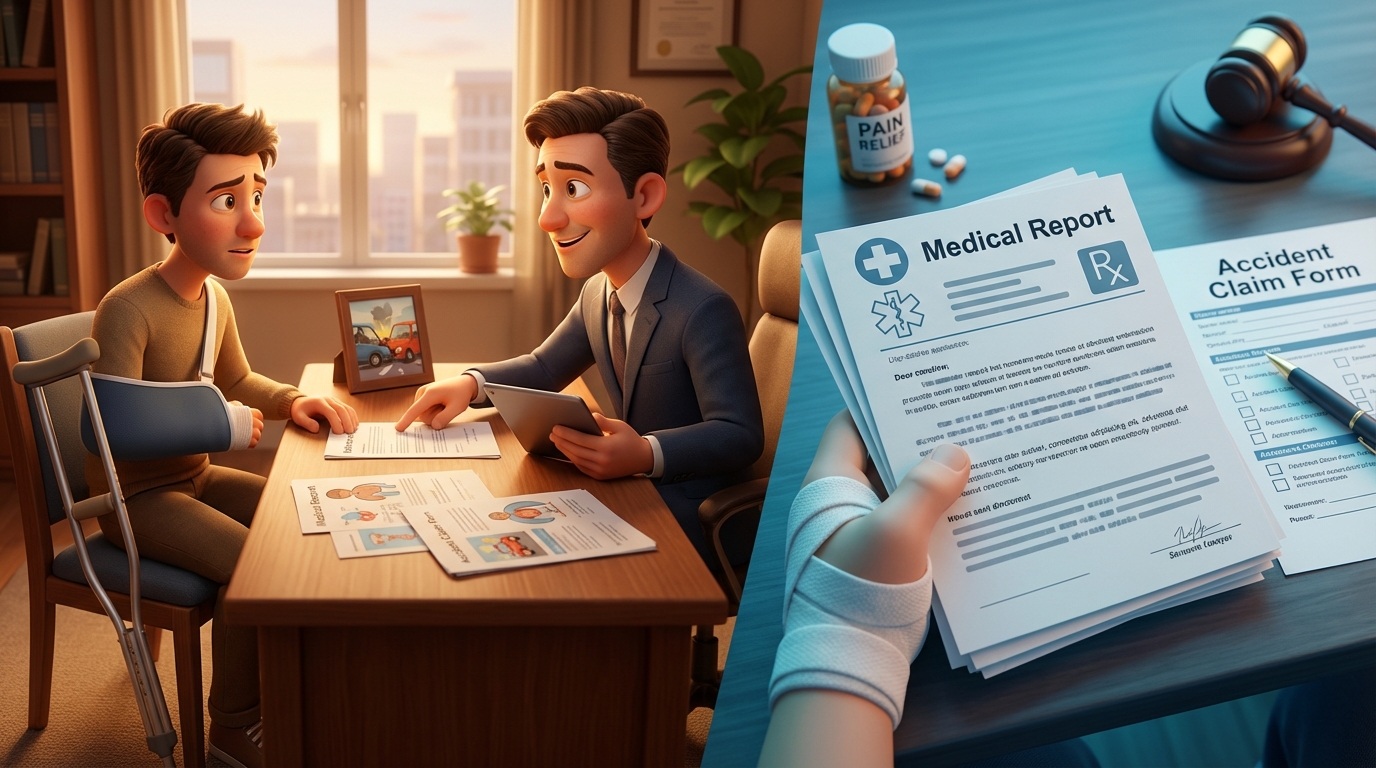
The Diverse Landscape of Personal Injury Claims
Personal injury law is a broad umbrella covering many different types of accidents and injuries. Each has its own specific legal standards and evidentiary requirements.
1. Motor Vehicle Accidents: The Data-Driven Battle
While common, car accidents are increasingly complex due to technology. Modern cases often involve "black box" data from vehicles, cell phone records to prove distracted driving, and sophisticated accident reconstruction software. Liability can also extend to multiple parties—for instance, if a commercial truck driver was fatigued, both the driver and the trucking company may be liable.
2. Premises Liability: Beyond "Slip and Fall"
Property owners are responsible for keeping their premises safe. Key to these cases is "Notice." Did the owner know about the hazard (Actual Notice), or should they have known if they were conducting reasonable inspections (Constructive Notice)? This applies to everything from wet floors and broken stairs to "negligent security" claims if someone is assaulted in an unlit parking lot.
3. Product Liability: Holding Corporations Accountable
When a consumer product causes injury, the manufacturer can often be held "Strictly Liable." This means you don't necessarily have to prove they were negligent—only that the product was defective and that the defect caused your injury. Defective medical devices, exploding batteries, and tainted food all fall under this powerful legal doctrine.
4. Medical Malpractice: The Standard of Care
These are among the most difficult cases to win. You must prove that a healthcare provider deviated from the "Accepted Standard of Care" in their specific medical community. This requires expensive expert testimony from other doctors and a deep dive into medical records to prove that the outcome wasn't just a known risk of the procedure, but a result of incompetence.
The "Invisible" Adversary: Dealing with Insurance Adjusters
It is vital to remember that an insurance adjuster's primary job is to settle your claim for the lowest possible amount. They are trained professionals who use specific tactics to devalue your case. One of the most common is the "Early Lowball Offer"—attempting to get you to sign a release before you've even finished medical treatment. Another is the "Recorded Statement Trap," where they ask leading questions designed to make you admit partial fault or minimize your injuries.
The rule of thumb is simple: Never give a recorded statement and never sign a release without an attorney. Once you have legal representation, the adjuster is legally prohibited from contacting you directly, immediately leveling the playing field.
Calculating Your Worth: Economic vs. Non-Economic Damages
What is your injury worth? In the eyes of the law, "Damages" are split into two categories. Economic Damages are the quantifiable losses: hospital bills, physical therapy costs, lost wages, and the cost of future medical care. These are relatively easy to calculate using receipts and expert testimony from vocational specialists.
Non-Economic Damages cover the "human" cost: pain and suffering, emotional distress, loss of enjoyment of life, and disfigurement. Because these don't come with a receipt, lawyers often use the "Multiplier Method" (multiplying your economic damages by a number between 1.5 and 5 depending on severity) or the "Per Diem Method" (assigning a dollar value to every day you've lived in pain). A skilled attorney knows how to tell your story in a way that makes these invisible losses tangible to a jury.
The Discovery Phase: The Engine of Your Case
If your case doesn't settle and a lawsuit is filed, you enter "Discovery." This is the long, meticulous process where both sides exchange information. You will answer "Interrogatories" (written questions), provide "Requests for Production" (documents like tax returns and medical records), and participate in "Depositions" (sworn out-of-court testimony). Discovery is where cases are won or lost. It's the stage where your attorney uncovers the "smoking gun" email or the maintenance log that proves the defendant knew about the danger. While it can be exhausting for the client, it is the essential work of building an airtight case.
Comparative Negligence: What if You Were Partially at Fault?
Most states use some form of Comparative Negligence. This means that if you were 20% at fault for an accident (e.g., you were speeding slightly when someone pulled out in front of you), your final award will be reduced by 20%. In "Modified Comparative Negligence" states, if you are more than 50% at fault, you receive nothing. Understanding how your own actions affect the value of your case is crucial for setting realistic expectations during settlement negotiations.
The Contingency Fee: Access to High-Level Justice
One of the most powerful aspects of personal injury law is the Contingency Fee model. You pay nothing upfront, and your attorney pays for all the costs of the litigation (which can reach tens of thousands of dollars). The attorney only receives a percentage (usually 33-40%) if they win or settle your case. This allows the average person to hire a high-powered legal team to go up against a multi-billion dollar insurance company. It ensures that justice is based on the merits of your case, not the size of your bank account.
Settlement vs. Trial: Knowing When to Fight
Most personal injury cases settle before reaching trial. Settlements offer guaranteed compensation without the uncertainty of a jury verdict. However, there are times when refusing a settlement and going to trial is the better choice.
If the insurance company refuses to offer fair compensation despite clear liability and serious injuries, a trial may be necessary. Jury verdicts can sometimes exceed settlement amounts significantly, particularly in cases with substantial medical expenses and pain and suffering.
Your attorney should provide honest advice about whether settlement or trial is more appropriate for your specific case. Consider the strength of evidence, the severity of injuries, and the jurisdiction's history with similar cases.
The Statute of Limitations: Time Is Not on Your Side
One of the most critical aspects of any personal injury case is the Statute of Limitations—the deadline by which you must file your lawsuit. In most states, this ranges from one to three years from the date of the injury. Failing to file within this window permanently bars you from seeking any compensation, no matter how strong your case may be.
This is why immediate action is essential after an accident. Evidence disappears, witnesses forget details, and physical injuries heal. The moment you suspect negligence caused your injury, consult with an attorney to preserve your rights and ensure the best possible outcome.
Working with Medical Experts in Personal Injury Cases
Medical expert testimony is often the backbone of a successful personal injury claim. These professionals can establish the nature and extent of your injuries, the treatment required, and the long-term prognosis. Your attorney will typically work with specialists who can testify about your specific condition.
In severe cases, experts may include orthopedic surgeons, neurologists, psychiatrists, or life care planners who can calculate future medical costs. The credibility and qualifications of these experts can significantly impact the outcome of your case.
Getting second opinions from medical professionals is always advisable. This ensures you receive appropriate treatment while also documenting your injuries thoroughly for legal purposes.
Understanding Pain and Suffering Damages
Pain and suffering damages compensate you for the physical pain and emotional distress caused by your injury. This includes immediate pain from the injury itself, ongoing discomfort from treatments, and the psychological impact of living with a permanent injury or disability.
Emotional distress can manifest as anxiety, depression, fear, or post-traumatic stress disorder. These conditions often require professional mental health treatment and can significantly impact your quality of life and ability to work.
Loss of consortium damages may be available to your spouse for the loss of companionship, affection, and intimacy. These damages recognize the broader impact your injury has on your family relationships.
The Role of Liability in Multi-Vehicle Accidents
Multi-vehicle accidents, also known as chain reaction crashes, present unique challenges in determining liability. Multiple drivers may share varying degrees of fault for the collision, and understanding each party's responsibility is essential for fair compensation.
In some cases, the driver who initiated the chain reaction may bear primary responsibility. However, other drivers who were following too closely or driving recklessly may also be assigned percentage of fault under comparative negligence principles.
Insurance companies often attempt to shift blame to multiple parties to reduce their liability. An experienced attorney can investigate the accident thoroughly and establish clear fault distribution.

Conclusion: Reclaiming Your Future
A personal injury claim is more than just a legal battle; it is a process of reclamation. It is about taking the broken pieces of your life and demanding the resources needed to put them back together. While no amount of money can truly replace your health or erase the memory of a traumatic event, a successful claim provides the financial security needed to move forward with dignity.
At Compare Experts, we are dedicated to providing the transparency and expertise needed to find the right legal partner for your journey. This 2000+ word guide is your foundation for understanding the complex world of personal injury law. Don't let your voice be silenced by an insurance company. Take the time today to understand your rights, document your losses, and reach out to an expert who can fight for the justice you deserve. Your future self is counting on you.
Sources & References
This guide draws on information from the following authoritative sources:
- American Bar Association — Personal Injury — Legal guidance & attorney resources
- Legal Information Institute — Torts (Cornell Law) — Personal injury law definitions & precedents
- National Center for State Courts — Court system information & civil litigation guidance
- Centers for Disease Control and Prevention — Injury Data — National injury statistics & prevention
- Federal Trade Commission — Consumer rights & legal protection
About the Author
Licensed Insurance Broker & Financial Planner
Life Insurance & Financial Planning
David holds dual licences as an insurance broker and financial planner with 15 years of experience, covering life insurance, renters coverage, and personal injury claims.
View full profile →Continue Reading
Explore more expert guides in our blog for insurance, legal, and finance advice.
Browse All ArticlesRelated Articles
The Shield of Liberty: Navigating the Complexities of Criminal Defense and Your Rights
Know your constitutional rights if you are accused of a crime and how to find effective legal representation.
The Asphalt Advocate: Mastering Road Accident Claims and Forensic Justice
Guide to filing road accident claims, understanding your rights, and maximizing your compensation.